

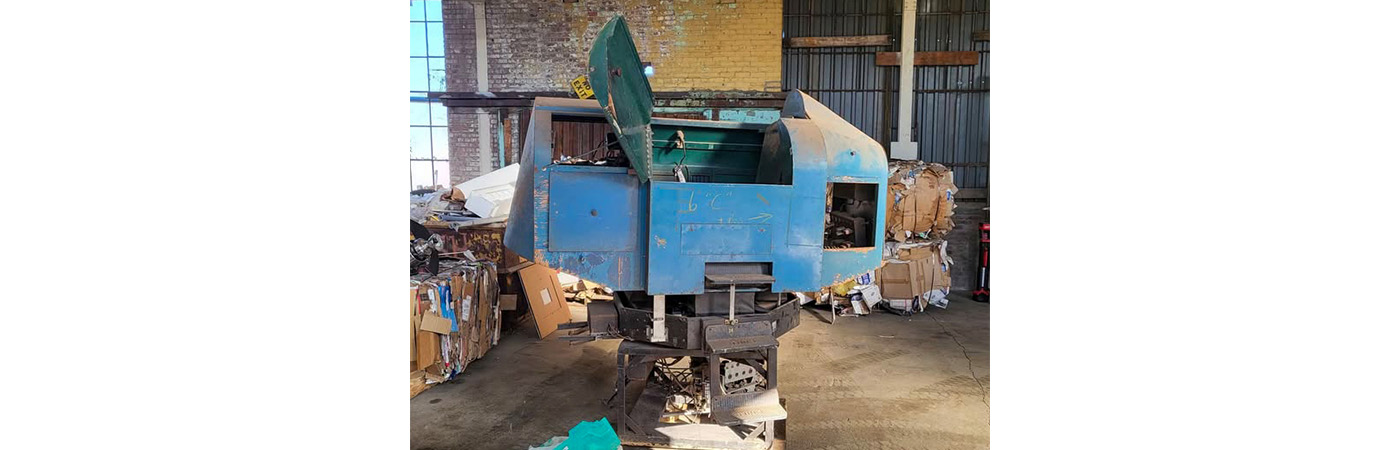
When we think about aviation restoration, we tend to think about tube-and-fabric antiques getting stripped down or warbirds getting dug out of a field. Sometimes, preserving aviation history happens on a smaller scale — like David Teitelbaum’s 1959 helicopter flight simulator.
David, EAA 241322, is a helicopter pilot and serial builder — he’s even built a RotorWay Scorpion Too. “I’ve worked on all kinds of projects from cars to construction equipment, houses, all kinds of things,” he said.
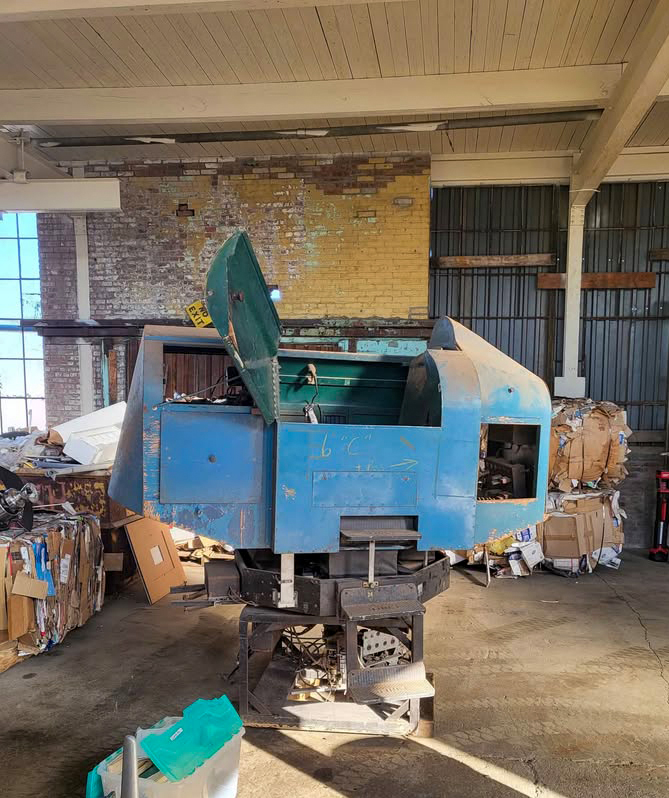
When he was recently in between projects, he turned to Facebook Marketplace, which is where he found a 1959 helicopter basic instrument flight simulator. “I have some experience [with this era of technology] because I rebuilt a player piano, and I’ve worked on pinball machines, jukeboxes, radios.”
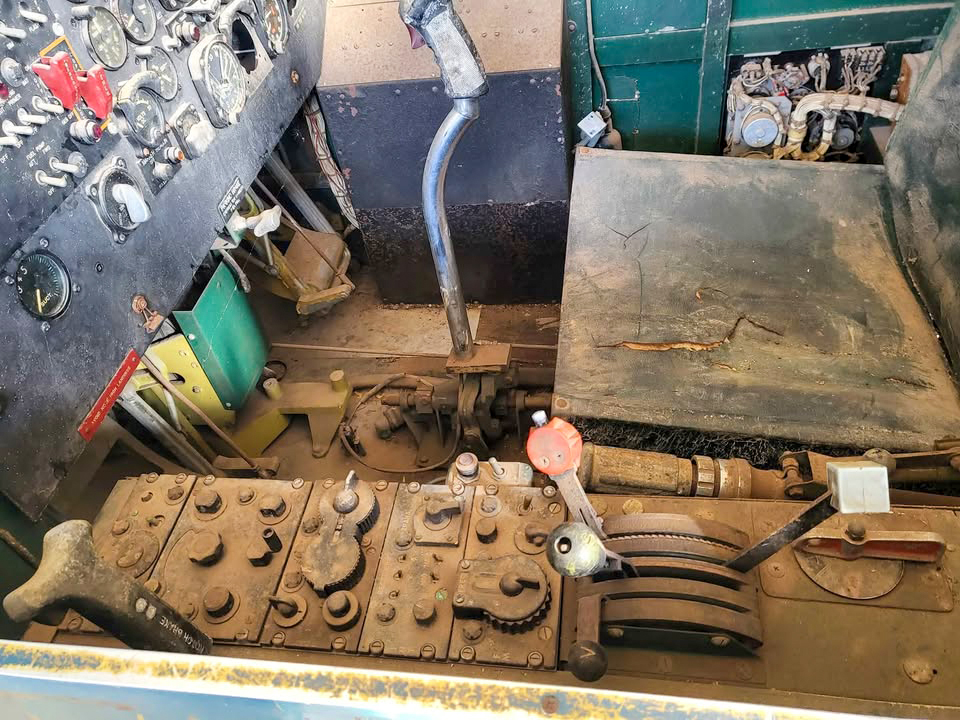
An evolution of the Link Trainer, aka the “Blue Box,” much of the technology that makes this simulator tick is far removed from flight simulators of today. “It is very Link like; the motion part of it was pretty much lifted right out of a Link Trainer,” David said. “It uses bellows and a pneumatic motor to make the motion, but it has a lot of 1950s electronics to try and simulate the experience. This was intended to be an instrument flight trainer for helicopters.”
“The Link Trainer was a very analog machine with very, very limited capabilities. This was an evolution in that line,” David explained. “It became more of a simulator where the instruments and controls actually affected everything, from the sound of the rotors to the vibration of the machine. And what was accomplished in this would later be done by computers.”
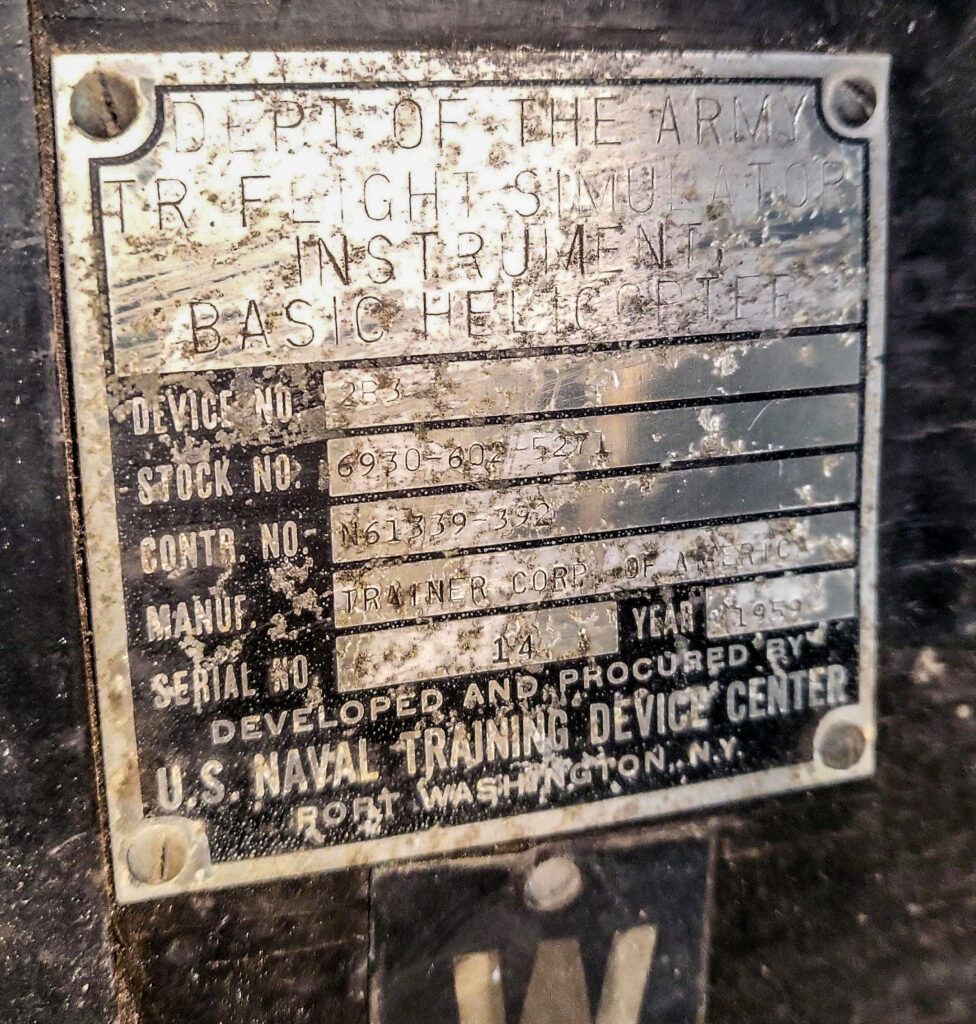
This particular model, 2B3, was commissioned by the Army and developed by the U.S. Naval Training Device Center. In 1941, the NAVTRADEVCEN was created to accelerate training capabilities of the Navy by exploring new training techniques such as simulation. In 1950, the Army made an agreement with the Navy to take advantage of the full capabilities of this program.
According to a 1972 report by NAVTRADEVCEN, the Navy did not develop a helicopter training device until 1958, so the 2B3 is early in the technology. “The problems of developing a helicopter simulator were considerably different from those encountered in the development of fixed wing aircraft OFTs [operational flight trainers], yet the need was even greater. The helicopter, inherently an unstable machine, challenged builders of simulators to arrive at adequate mathematical representations of the rotor blades throughout the flight envelopes, and to reflect these highly complex forces in the simulator,” the report reads.
Only 18 of the 2B3 model were produced and used to train Army airmen on basic helicopter instruments. “It has vibration, it has motion, it has all the instruments in it. It has radios in it — they’re not radios, it’s more like an intercom. It has a little auxiliary control panel on the outside so the instructor can modify things and throw problems at the student and see how they react,” David said. “In fact, there’s headphones and a microphone, and the instructor can talk to the student like air traffic control.”
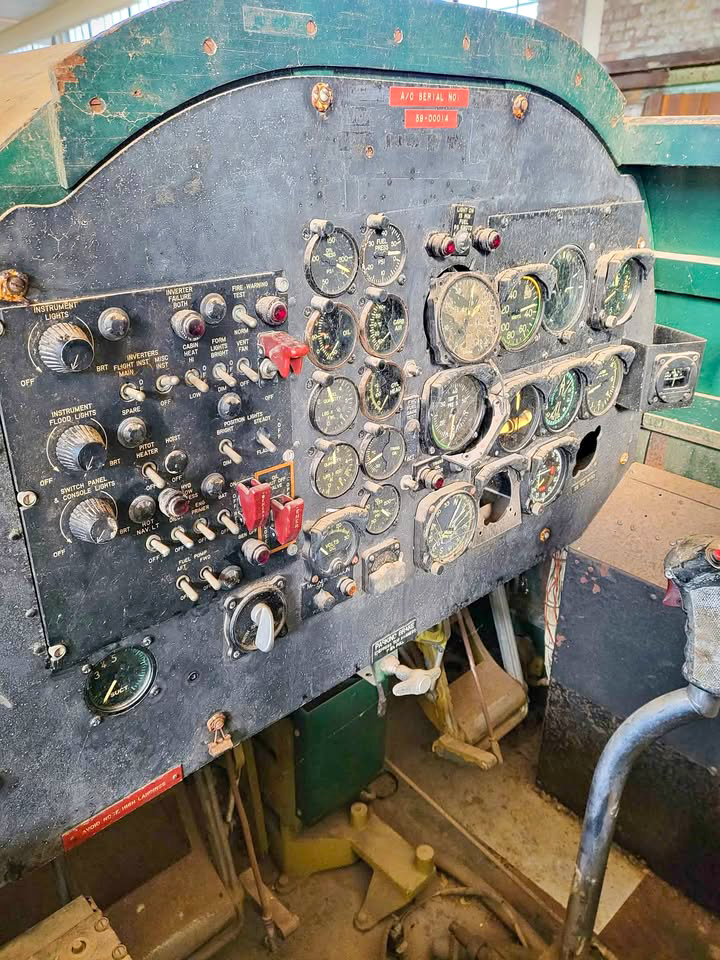
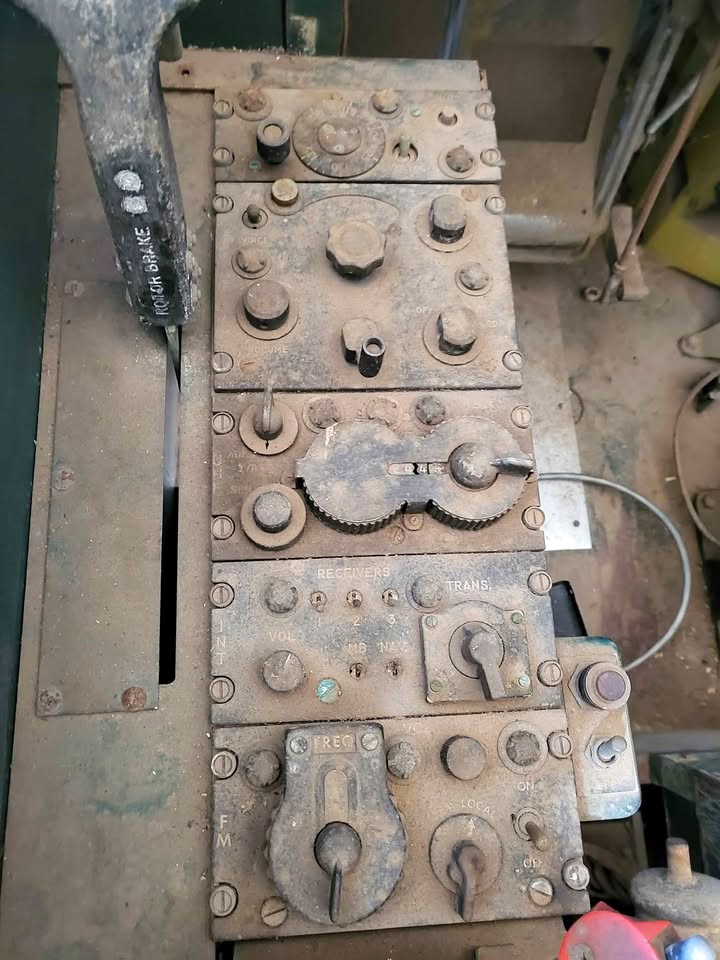
When new models and technology were developed and the military no longer needed the 2B3 model, they were put up for sale. This one sat in the first buyer’s barn for decades until he died, and the gentleman who purchased it from the first buyer’s estate realized he didn’t know what to do with it. That’s when David came to the rescue.
“It’d be a shame for this piece of history to disappear just because no one right now thinks it’s of any value. And once it’s gone, it can never be replaced. There were so few of them that it’s very likely they’d all be lost, so I’d like at least one representative sample to be saved,” he said.
So far, David has completed much of the cosmetic work, with instrumentation work to come. “I’ve cleaned it as best as I could. I painted the exterior of it and cleaned up a lot of the connections, cleaned up a lot of the wiring, and got it to function somewhat,” he said.
David’s hope for this rare simulator is to find a home in a museum for it to show future generations how technology has evolved. “It can show how technology evolved and what was available at the time, and how they were able to do things that today, we would with a little bit of code in a computer. That wasn’t the way it was done back in the day,” he said. “I think if a museum took it, it’s kind of like a draw for the visitors. They can actually interact with it, they could offer for visitors to get in it and actually try it and see what it was like back in the day.”
“Too many people just don’t give enough value to the old things, and that’s where the new stuff evolved from,” David said.
If you’re interested in learning more about David’s helicopter flight simulator or know of a museum it could call home, you can reach him at jtrealty@optonline.net.